
Painting for beginners: how to start your first canvas
By Asma Kian, 20 November 2026, 7 minute read
In short
Start small, with acrylic on a 30 x 40 cm canvas. Practise five brush skills first, then paint in stages: sketch, dark shapes, middle tones, light, and small details last. Pick a simple subject like a block of colour, a sea and sky, or one object on a table.
What you need, and nothing more
- Acrylic paint in white, black, yellow, red and blue.
- A large flat brush, a medium round brush and a small round brush.
- One or two stretched canvases, about 30 x 40 cm.
- A palette: a plate covered in baking paper works.
- A jar of water, paper towel and a pencil.
Not sure about acrylic or oil? Read acrylic vs oil painting for beginners first. For a first canvas, acrylic is the easier start.
Five brush skills to practise before you paint
Spend fifteen minutes on a piece of paper or an old canvas before the real one. These five skills make the difference between a painting that looks flat and one that looks alive.
- Load the brush properly. Dip only the front third of the bristles, then wipe one side on the palette. Too much paint makes blobs; too little makes scratchy marks.
- Use the flat side and the edge. A flat brush makes wide strokes with its face and thin, sharp lines with its edge. Turn the same brush to get both.
- Press and lift. Press the brush down to start a stroke wide, then lift as you move to make it thin. This one movement paints leaves, waves and hair.
- Blend while wet. Put two colours next to each other and brush across the line where they meet, back and forth, until it softens. Work fast with acrylic.
- Dry brush. Wipe most of the paint off and drag the brush lightly over a dry layer. It catches the texture of the canvas and makes rough light, like sun on sand or sea.
Paint in this order
Beginners often start with the details they like most, an eye or a flower, and then get stuck. Painters work the other way round: big shapes first, small things last.
- Sketch lightly with a pencil or a thin brush. Only the main shapes.
- Block in the darks with thin paint. This sets the structure.
- Add the middle tones over the largest areas: sky, wall, table.
- Add the light: the bright side of each shape, thicker paint.
- Details last, with the small brush, and only where the eye goes first.
- Step back. Look from two metres away, change one thing, then sign it.
Three easy first subjects
1. A field of colour
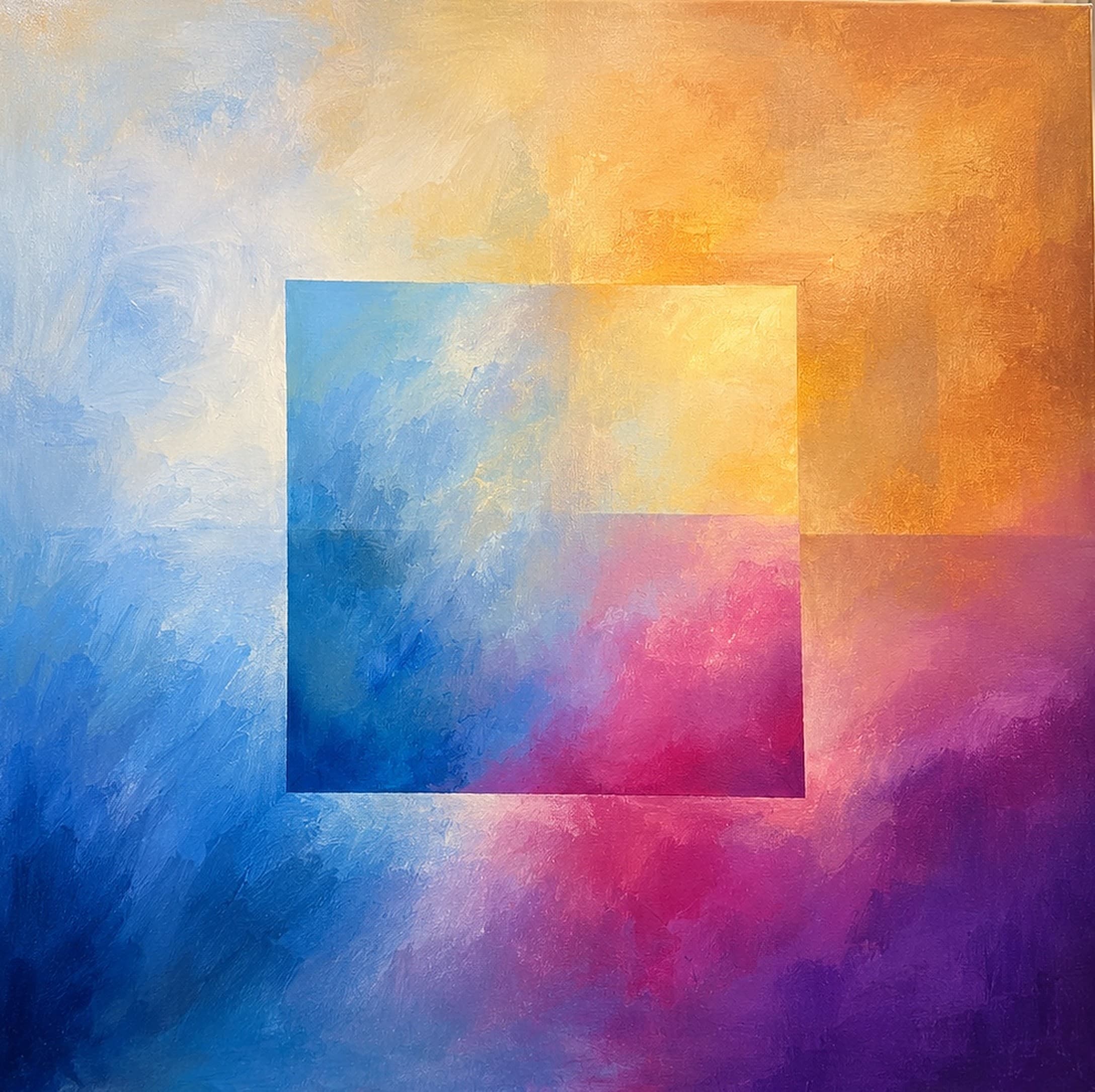
One large square of colour inside another, blended at the edges. No drawing at all, so you can think only about mixing and blending. Asma’s Interference is this idea taken much further.
2. Sea and sky
Two bands of colour and one line where they meet. Add white with the dry brush for waves. It is the classic first landscape for a reason: it teaches blending and dry brush in one canvas.
3. One object on a table
A cup, a glass, a single fruit. One light from the side. You learn light, shadow and shape without the stress of a face. See how a glass can carry a whole painting in Nightcap.
Mistakes almost every beginner makes
- Too little paint on the palette, then mixing a new colour that does not match.
- Using only the small brush. Use the biggest brush you can for as long as you can.
- Black for every shadow. Mix shadows from blue and red, or the colour’s opposite.
- Working only up close. Stand back every ten minutes.
- Stopping at the “ugly stage”. Every painting looks wrong halfway. Keep going.
When a class helps
A book can show you the steps. A teacher can see what your hand is doing and fix it in a minute. If you want to finish a first painting in one relaxed evening with friends, a paint and sip workshop walks a whole group through it step by step. If you want to learn properly at your own pace, choose private painting lessons. All the options are on the painting classes in Dubai page.